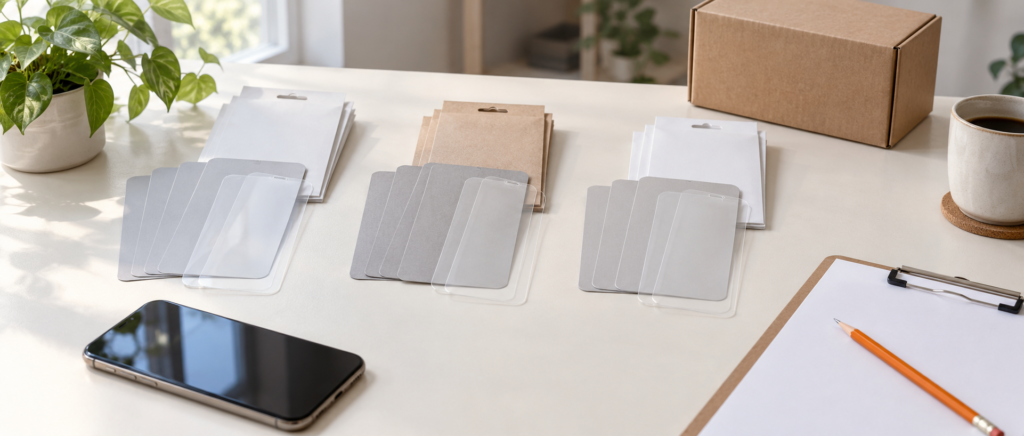
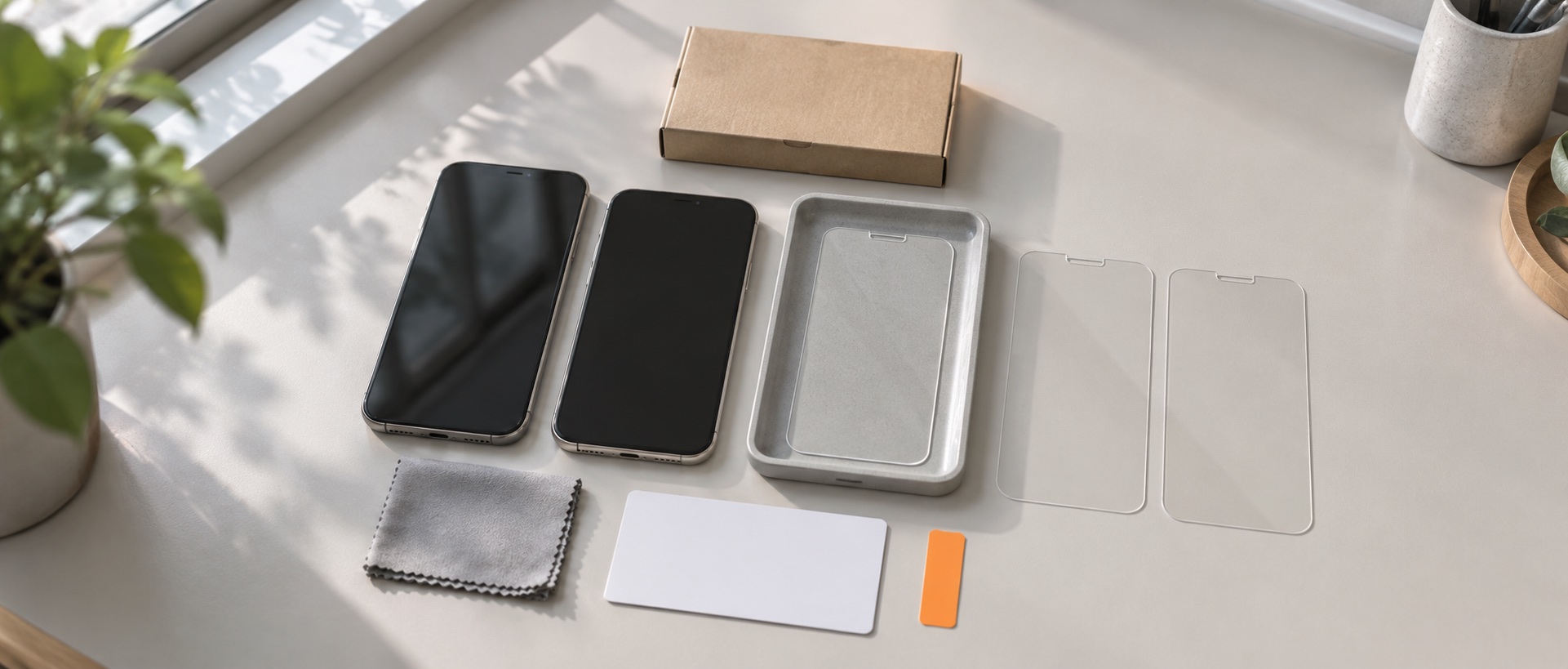
1. How do you evaluate a screen protector manufacturer’s production route?
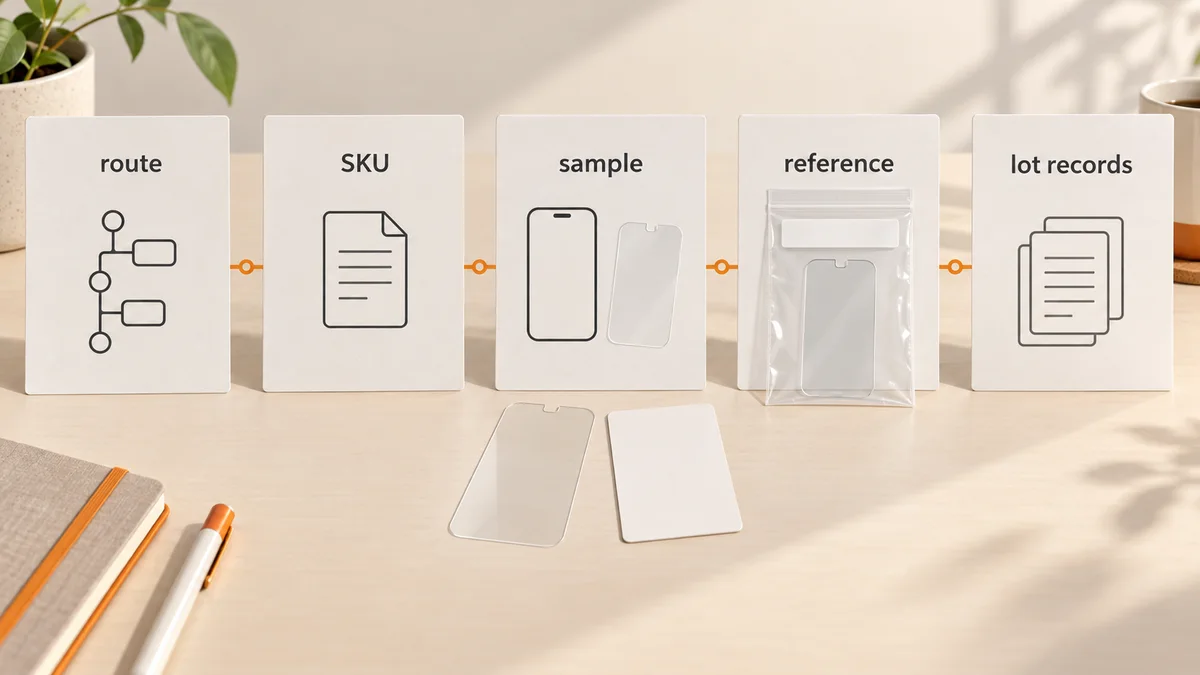
Before a wholesale order, evaluate a screen protector manufacturer against five linked records: the production route, a written SKU specification, device or machine sample results, a retained reference, and production-lot inspection and correction records. A factory tour or a successful installation helps, but the purchasing decision depends on whether the same construction, fit and finish can be reproduced in your order. For a U.S. repair chain, retailer or distributor, the useful evidence is tied to the actual SKU and workflow you plan to sell.
Start with the process that matters to that product. For tempered glass, identify who performs cutting, edge finishing, strengthening, coating, adhesive application and packing. For cutting film, identify who controls the film construction, sheet conversion, release liners and final packing. Mark each operation as in-house or subcontracted, and name the party responsible for inspection and changes. A supplier may use outside processes; you need visibility into who controls the result.
A focused live walkthrough can show the proposed product or material at the relevant workstations. Pair it with a dated, redacted production traveler or inspection record for a comparable product. Check whether the materials, equipment, work steps and inspection responsibilities line up. General equipment photos establish less than a traceable explanation of how your selected construction is made. If the route remains unclear, resolve that gap before treating the supplier as qualified for this product.
If a supplier presents ISO 9001 certification, verify the certificate holder, site, scope, validity and issuing body. ISO’s guidance on conformity attestations distinguishes management-system certification from product certification. A management-system certificate does not prove that a protector fits a particular phone or meets your agreed performance limits. Keep that document review separate from product acceptance.
2. What should a screen protector manufacturer’s approved sample specify?
A screen protector manufacturer’s approved sample needs an identity and a written specification. Record the supplier SKU, revision, material or construction, finish, adhesive arrangement, intended device or sheet format, and packaging version. Where thickness is specified, identify the layer being measured and whether liners are included. Otherwise, two samples described with the same thickness may represent different constructions.
Set the acceptance method before testing. A phrase such as “good clarity” gives an inspector little to reproduce. For a visual comparison, agree on the display content, brightness, lighting, viewing positions and retained reference. For a numerical claim, require the method, conditions, units, instrument and acceptance limit. Product claims should be supported for the construction being ordered.
| Characteristic | Record before approval | Example reason to hold approval |
|---|---|---|
| Device fit | Exact device model, drawing revision, coverage, cutouts and selected case | A cutout is obstructed, coverage differs from the drawing or the case lifts an edge |
| Installed appearance | Installation instructions, allowed settling time, viewing conditions and reference photos | Bubbles, contamination or edge lift remain outside the agreed limit |
| Function | Touch, sensor or privacy checks applicable to that SKU and the agreed procedure | A required function cannot be reproduced under the approved conditions |
| Packing identity | Model label, barcode, kit contents and packaging revision | The label identifies a different model or required kit components are missing |
These are proposed approval checks, not universal tolerance values. Agree on the limits for your use case and keep photos of acceptable and unacceptable examples where a visual judgment is involved.
“9H” alone is insufficient evidence of durability. If the claim relies on a pencil-hardness test, review the tested coating film and method. ASTM D3363 addresses coating-film hardness by pencil test and notes that pencil and substrate differences can affect results. That result does not, by itself, establish drop protection. Keep scratch, coating-wear and impact claims in separate test records.
3. How do device and cutting trials help evaluate a screen protector manufacturer?
A sample should pass in the setup your staff or customers will use. Divide the planned range by differences that could change the result: construction, finish, adhesive, device geometry, sensor requirements and installation method. Cover those differences in the sample plan. A pass on one flat-screen phone does not establish approval for a curved screen, another sensor configuration or every model in a catalog.
3.1 For model-specific protectors, install on the named device
Use the exact model and the intended case. Record the phone model identifier, software version where relevant, protector revision, installer and installation conditions. Check cutout alignment, visible coverage and case clearance first, then examine the installed surface under consistent lighting. Follow the supplied installation instructions and record results again after the agreed settling period. Do not turn an immediate installation observation into a long-term adhesion claim.
Compare required functions before and after installation on the same device. Include touch response and any in-screen fingerprint requirement in the written plan. Samsung’s fingerprint troubleshooting guidance notes that an uncertified protector may interfere with the sensor and that re-registering fingerprints may be needed after replacement. Follow the device maker’s current instructions and record any permitted setup change; do not infer compatibility across a phone family from one successful unlock.
For a privacy product, compare front viewing and the specified side-view directions using the same screen content and lighting. Treat this as a buyer’s comparison unless a defined optical test supports a numerical angle or transmission claim. For foldable inner displays, use the device maker’s approved service and accessory route rather than extending an ordinary phone sample procedure. For example, Samsung’s Galaxy Z screen protector guidance directs application and replacement to authorized service locations.
3.2 For cutting sheets, approve the film and machine together
Test the proposed sheet on the actual cutting-machine model with its supported settings and template. Record sheet format, orientation, liner handling, blade condition, settings and template revision. Examine the cut before installation: edge quality, incomplete cuts, liner behavior and alignment. Then install on the target device and apply the same fit and function checks used for a model-specific protector.
If a cut fails, separate a material issue from a template, setting or blade issue. Change one permitted variable at a time, document it and repeat the check. Approval applies to the tested configuration. A different film construction, machine or template requires its own review; a general “hydrogel compatible” statement is not enough.
4. Which reference should a screen protector manufacturer’s production samples match?
Retain identifiable approved samples with the specification revision and approval date, and arrange a matching reference with the screen protector manufacturer. Reserve uninstalled units where possible so the comparison is not based only on a used protector. Photos help describe the result, but they cannot replace physical checks of fit, installation and function.
Before releasing a larger order, compare samples selected from the production run with that reference using the same procedure. Record who selected them, the lot, models, carton positions and results. Samples drawn only from a presentation pack give you little information about variation across a shipment. Where order risk justifies it, have an independent inspector select the samples from finished goods.
A limited first production order can test whether the approved specification survives normal packing, receiving and store installation. Track failures against units inspected or installation attempts, and separate product defects from handling and installation mistakes. Define the release criteria in advance. A pilot is evidence for the products and conditions observed; it is not a guarantee for every future lot.
5. Which shipment records help evaluate a screen protector manufacturer?
A useful final inspection report links the result to the actual shipment. Require:
- Order, SKU, specification revision and production lot.
- Inspection date, inspected quantity, method and acceptance limits.
- Observed defects, disposition and evidence of any correction.
- Instrument identity and relevant calibration status, where an instrument is used.
The record should show what was checked, including failed findings and their resolution, rather than only a “passed QC” stamp.
For sampled inspection, agree on the lot definition, selection method, sample size, defect categories and accept/reject rules with the supplier or inspector. An advertised AQL number does not state the actual defect percentage in your shipment. NIST’s acceptance-sampling guidance explains that sampling supports a lot acceptance decision rather than an estimate of lot quality. Do not copy a competitor’s generic defect thresholds into your specification without assessing the product and inspection plan.
Link the report to carton or lot identification that remains usable after receiving. If several materials or production lots are combined, preserve the mapping. For claims supported by a laboratory report, match the tested sample’s identity and construction to the proposed SKU, and check the method, date and scope. A report for a different adhesive, coating or product revision leaves a verification gap.
6. How should a screen protector manufacturer correct an inconsistent lot?
When a production sample differs from the approved reference, use an agreed correction process:
- Hold: pause the affected release and identify the requirement that changed.
- Record: document the lot, sample quantity, setup and photographs; retain failed units.
- Correct: confirm the cause, authorized change and evidence of rework or replacement across the affected lot.
- Recheck and release: repeat the required checks against the approved reference; have the designated person authorize release.
If installed samples fail, compare them under controlled conditions with the approved reference before assigning the cause. A replacement sample alone does not establish that the whole lot was corrected. Do not approve an undocumented substitution because it looks close enough in a message.
For repeat orders, require proposed changes to material, adhesive, coating, dimensions, templates or packaging to be reviewed against the approved revision. The trigger is a change that could affect fit, function or delivery identity. Agree on the required evidence and approval before the changed construction is shipped.
7. When is a screen protector manufacturer’s evidence sufficient for an order?
Proceed with a screen protector manufacturer when the manufacturing route is clear, the specification and reference are identifiable, the intended device or machine workflow passes the agreed checks, and the production inspection and correction process are documented. Hold approval when one of those links is missing. Decline the proposed configuration if it repeatedly fails an essential requirement and no acceptable correction is demonstrated.
There is no universal sample count that qualifies every manufacturer. The plan should cover the relevant variations and include a production comparison. If your budget cannot support testing the whole proposed range, narrow the initial range rather than approving untested constructions by association.
Keep commercial negotiation with a screen protector manufacturer separate from qualification. Use the OEM MOQ, lead-time and cost guide for the commercial scope, and the China supplier selection guide for finding and screening candidates.
For a JJT sample inquiry, send the exact device list or cutting-machine model, intended product construction and finish, installation workflow, target market and the checks you need to perform. Include your current reference or drawing revision if available. Discuss the proposed samples and required evidence with JJT before approving the configuration.