1. Tempered glass vs hydrogel film: what should your shop stock?
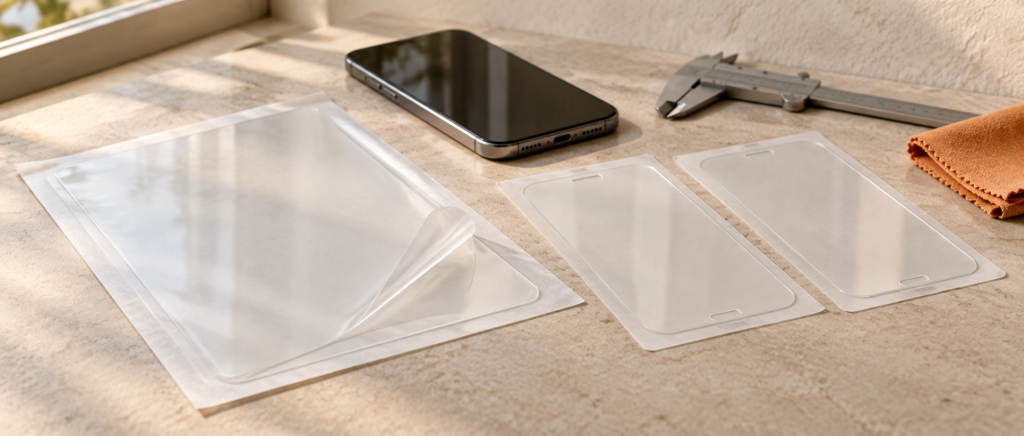
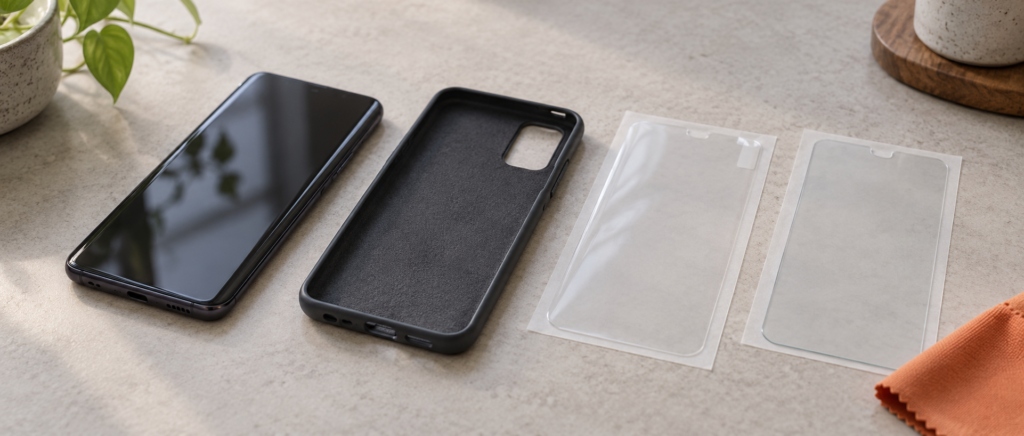
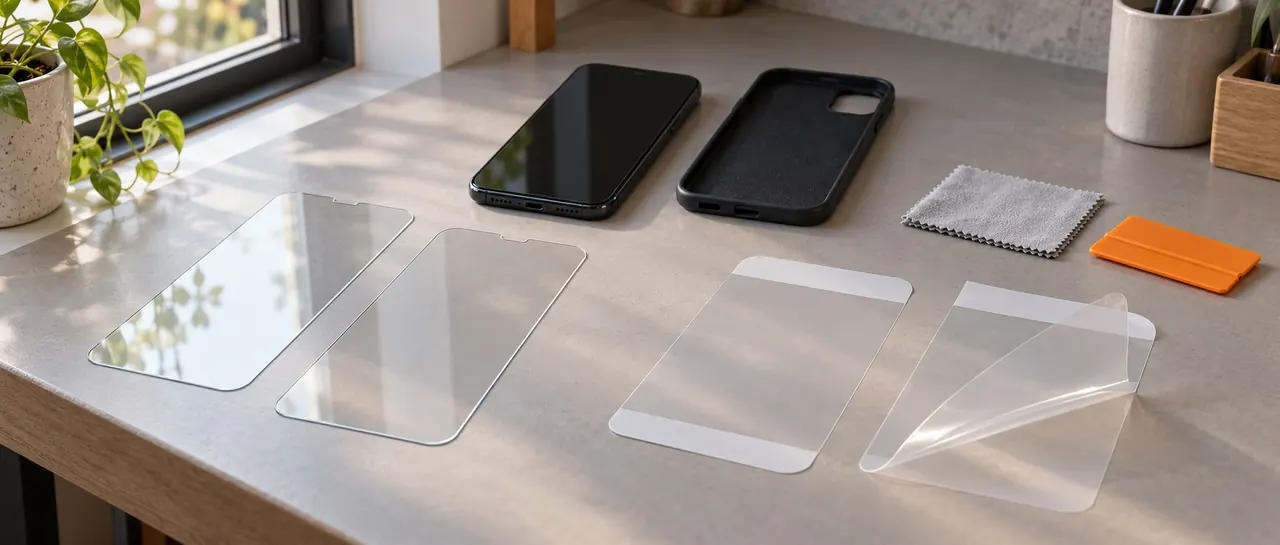
When comparing tempered glass vs hydrogel film, stock the format your customers will choose and your team can install reliably. Start with device-specific tempered glass if your counter mostly serves a small group of repeat phone models and customers want a rigid glass surface. Add flexible film when you can identify demand for that feel or coverage and verify the exact device fit. Offer both when each solves a documented customer need; a second material is not automatically a better inventory investment.
For a repair shop, the decision includes installation time and the outcome at handoff. For a retailer selling boxed protectors, it includes the customer’s installation method. For a distributor, it includes what downstream stores can actually stock, cut and support. These businesses can reasonably choose different mixes for the same device.
| Format | When to consider it | What must be ready |
|---|---|---|
| Precut tempered glass | Confirmed device demand and customers who choose the glass feel | The exact device SKU, case clearance and supplied installation method |
| Precut flexible film | Confirmed demand for a particular film, without an in-store cutting service | The correct outline, film version, liner sequence and installation instructions |
| Uncut film for on-demand cutting | Requests across several supported models where cutting at the counter is practical | Compatible film, working cutter, accessible device template and a trained installer |
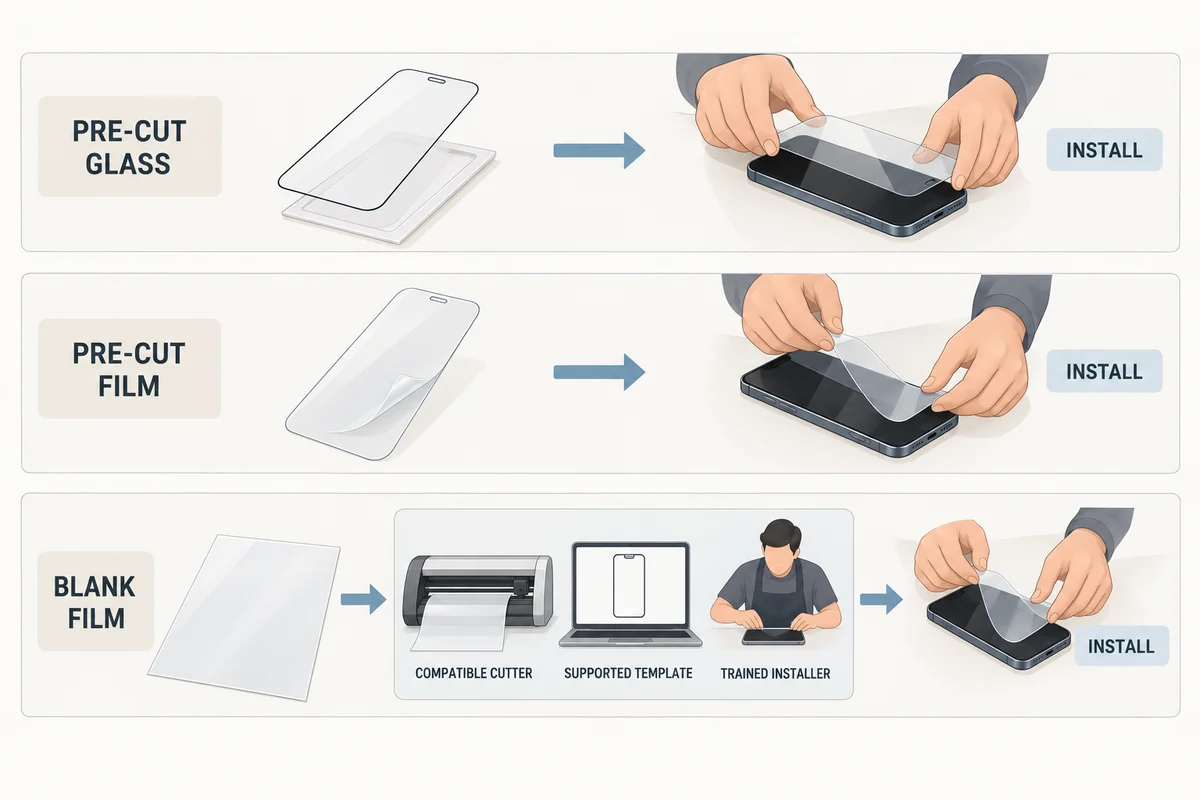
In a tempered glass vs hydrogel film comparison, keep material and stocking format separate. Flexible film can be supplied precut; buying film does not require buying a cutter. Conversely, a blank sheet is not a ready-to-install protector. JJT’s current cutting-machine range is for compatible flexible film, not tempered glass. Its glass range uses device-specific finished protectors.
2. How does device fit affect a tempered glass vs hydrogel film stock decision?
Identify the exact device and screen position before offering either format. Then ask what the customer wants to change: the surface feel, glare, privacy, coverage or an existing fit problem. A brief demonstration on an appropriate sample device is more useful than describing all glass or all hydrogel as one experience.
“Hydrogel” is not a complete product specification. JJT lists several film families and versions. The selected item’s construction, finish, adhesive and instructions determine what you can promise. Do not assume every film has the same scratch recovery, texture or installation process.
2.1 Check curves, cases and sensors together
A flexible sample can bend, but that alone does not prove it will stay attached around a curved display. Evaluate the exact film and outline on the intended device with its case fitted. Inspect the edges, openings and swipe area after the product’s stated installation or settling period. A glass protector also needs the appropriate geometry and adhesive for that screen; “edge-to-edge” on a box does not settle case clearance.
Case clearance is a design choice. Belkin’s buying guide discusses flat and extended coverage alongside case compatibility. Check both on your own samples, rather than treating maximum coverage as the only acceptable outcome.
Verify touch, fingerprint recognition and any covered camera or sensor on the exact device and protector. Samsung warns that some third-party glass and films can affect display quality, touch and fingerprint functions. Neither “thin film” nor “glass” establishes sensor compatibility. Keep the sample result tied to that configuration.
For a foldable phone, distinguish the outer display from the factory inner protector. Follow the device maker’s service guidance for the inner screen; an ordinary film sample or cutting template is not authorization to replace it. See the foldable peeling guide for that service boundary.
2.2 Separate protection claims from the stocking decision
Do not sell either format with a promise that it will prevent a broken screen. A material label cannot establish a universal drop advantage across different protectors, phones, cases and impact conditions. If a customer needs a particular durability claim, obtain evidence for the exact product and test conditions instead of extending another brand’s result to your stock.
Hardness labels need the same care. Belkin’s comparison guide identifies pencil hardness as a resistance test involving pencils. A “9H” label is not a Mohs rating or a drop-test result. Likewise, a surface-recovery claim for a film does not mean it repairs damage to the phone display.
3. What installation work should you compare for tempered glass vs hydrogel film?
Compare the complete service, from identifying the phone to handing it back. A protector that is easy for one trained installer may produce rework on another shift. Use the supplied instructions for each candidate; do not assume all glass is a drop-on application or all flexible film needs liquid.
- Precut glass: confirm the device label and kit, clean and align using its instructions, then inspect adhesion, edges and functions. Check whether an alignment aid is included in the quoted package.
- Precut film: confirm orientation and removable layers, apply using its specified dry, wet or other process, and explain any stated settling period before handoff.
- On-demand film: first select the correct template and approved film setup, cut and inspect the outline, then perform the film’s installation and handoff checks.
A cutter adds a production step to the counter. Before selling the service, confirm film dimensions and loaded layers, machine and blade suitability, template access, account or network requirements, and a repeatable setup. Do not substitute a thickness on a catalog page for cutting instructions. The TPU, EPU and PET compatibility guide covers the sample checks in detail.
Time cleaning, alignment or template selection, cutting where applicable, installation and inspection. Record failed pieces and repeat attempts. If instructions or compatibility remain unresolved, keep that configuration out of customer service until it is accepted. A fast cut by itself does not establish a fast, successful installation.
4. What costs should you compare for tempered glass vs hydrogel film?
Base your tempered glass vs hydrogel film cost comparison on current quotations and actual counter records. There is no reliable rule that glass always earns more per sale, film always creates more repeat purchases, or a cutter always saves money. Selling price, landed cost, labor, rejected pieces and returns decide the result for your business.
| Input | Precut glass or film | On-demand film |
|---|---|---|
| Inventory commitment | Units and landed cost by device-specific item; unsold stock | Approved blank film by version and size; unusable remnants and stock on hand |
| Consumables and rework | Protectors, cleaning supplies, kits and rejected installations | Film used for accepted cuts, trial cuts, failed cuts and replacement installations; blades and supplies |
| Staff time | Selection, cleaning, installation and inspection | Those steps plus template selection, loading and cutting |
| Service commitments | Actual returns and agreed replacement policy | The same, plus equipment/software/support costs included in your agreement |
For an installation comparison, divide the trial’s consumed protectors or film, supplies, and installation/rework labor cost by its accepted installations. Keep equipment and recurring service costs visible separately, then allocate them over a stated planning period and realistic volume. For boxed retail, compare the cost and return history per unit sold instead. Use the same accounting boundary for both candidates.
On-demand film can move stock from individual phone outlines to shared blank material, provided the necessary templates and film are usable. It still ties up cash in consumables and equipment, and it cannot satisfy a customer who specifically chooses glass. Precut stock can serve a known model immediately, but each unsold device-specific item remains inventory. Use the cutting-machine cost guide for the quotation boundary; use the product-line planning guide for a wider SKU plan.
5. How should you trial tempered glass vs hydrogel film before reordering?
Test tempered glass vs hydrogel film on a limited set of devices your shop already sees, and offer only configurations that passed the fit and installation checks. Include a less frequently requested model if testing the value of on-demand coverage is part of the decision. Set a review date and an affordable stock commitment before ordering. This is a proposed shop procedure, not a report of JJT market tests.
- Record requests as well as sales. Note device, requested format, offered options and whether the customer accepted, declined or could not be served. Separate lack of stock from lack of demand.
- Record fulfillment. Log exact product/version, installer, time, pieces used, accepted result and any later return or complaint. For cut film, retain the machine/template/setup reference.
- Review the reason for failure. Distinguish customer preference from case lift, sensor issues, poor cutting, installation errors and unavailable templates. Each calls for a different decision.
- Reorder selectively. Continue formats with repeat requests and acceptable service results. Resolve a repeatable process problem before increasing stock; discontinue an unsuitable configuration even if the material family remains in your range.
If customers repeatedly choose glass and the device-specific items move, maintain those glass SKUs. If supported requests are being missed and a film service fulfills them reliably at an acceptable cost, expand that service within the verified range. Keep both when the records show that customers use both. A distributor can collect the same fields from a small group of retail partners before proposing a network rollout.
6. What should you request from JJT for a tempered glass vs hydrogel film comparison?
Request defined tempered glass vs hydrogel film samples for comparison, rather than a general “glass versus hydrogel” recommendation. JJT lists both formats, but the orderable configuration, quantities, packaging and commercial terms require a scoped quotation. Send:
- The exact device models, market versions, screen positions and cases used in the trial.
- The proposed glass items and exact film versions/finishes, specifying precut protectors or uncut material.
- Your installation method; for cut film, the machine model, blade, material format and required templates.
- Sample quantities, pass criteria, packaging, destination market and the evidence needed for any product claim.
Request a sample and quotation comparison with this brief. Approve the configurations your staff and customers can use successfully, then let the trial records determine the reorder mix.